
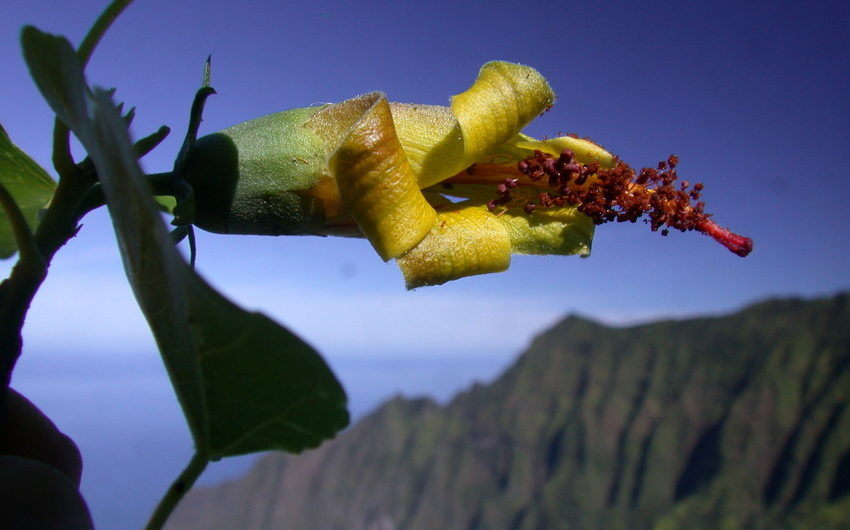
A Hawaiian relative of the hibiscus flower was newly rediscovered on the island of Kauai after thought to be extinct. Researchers from the National Tropical Botanical Garden flew a drone over an unexplored cliff habitat. The drone footage found a small colony of the hibiscadelphus woodii. Three individual plants were growing out of a steep cliff.
Prior to its rediscovery in 2019, only four individual plants existed in 1991. Consequently, in 1995 the scientists labeled it as a new species. However, a boulder crushed 3 out of the 4 plants, which died between 1995 and 1998. Furthermore, the remaining plant appeared dead in 2011. As a result, the International Union for Conservation of Nature assessed the species as extinct in 2016.
After presumed extinct, scientists tried to propagate and reproduce the flower through cross-pollination, grafting and using tip cuttings. However, these efforts failed. Fortunately, a grant from the Mohamed bin Zayed Species Conservation Fund led to their rediscovery using drone technology.
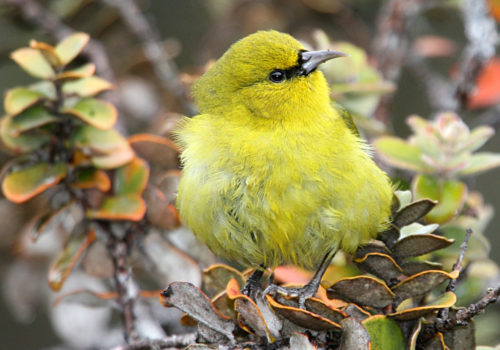
In the wild, endemic Hawaiian honeycreepers and ‘amakihi likely pollinate the plant. These endemic birds can reach the high elevations that the hibiscadelphus woodii inhabits.